
Adventures, mishaps, and memories from a 13-day trip to Italy.
After wrapping up my Switzerland trip on September 9th, my Schengen Visa was still valid until October 13 — so I chose Italy. While planning, I was thrilled to discover it was the Jubilee Year in Rome. Once every 25 years, the Holy Doors are opened for pilgrims to walk through! I felt blessed to walk through two.
My solo trip to Italy was planned with the help of ChatGPT. I even enrolled in a Coursera course on Prompt Engineering for better search results. In Milan and Rome, I travelled by bus and metro, following my AI-generated daily plan. The travel times were perfectly calculated. I loved how it even included pauses for coffee at trattorias and leisurely lunch breaks.
My Italy Route
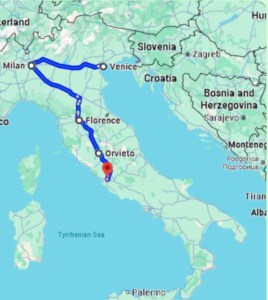
I traveled between cities using Italy’s high-speed trains, Trenitalia and Italo — along with regional trains for shorter trips.
Here are a few unforgettable moments from my journey.
Venice Sept 25, 26: Canals and the Dolomites
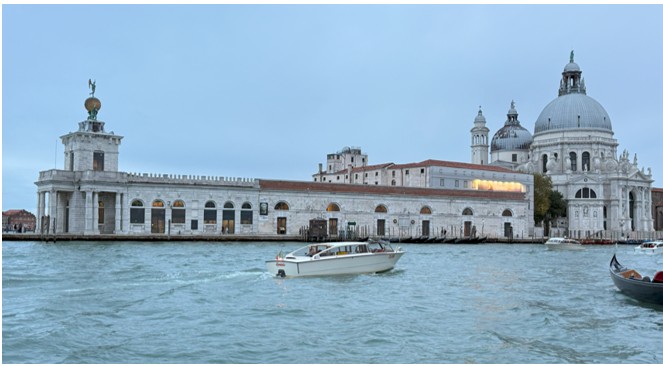
I experienced the water bus ride, the Vaporetto on route No. 1. These are public transport boats. From the deck, I admired bridges, bus stations, buildings and the magnificent façade of the Basilica di Santa Maria della Salute from the waterfront.


The next day was a trip to the Dolomites. It was a rainy, cloudy morning, but still a beautiful drive through the hills. In the mist, glimpses of the Dolomites were breathtaking.

Leaving Venice, I traveled next to Milan
Milan Sept 27 to 29: the Cathedrals & the Crisis
I arrived in Milan on the afternoon of the 28th and strolled to the Navigli district, a neighborhood renowned for its canals. The next day, I explored much of the city, visiting its historic landmarks.
- Duomo di Milano: Soaring spires and intricate marble details left me in awe.
- Chiesa di San Maurizio: Known as Milan’s Sistine Chapel. The walls and ceilings feature vivid frescoes by Bernardino Luini and other Renaissance artists.
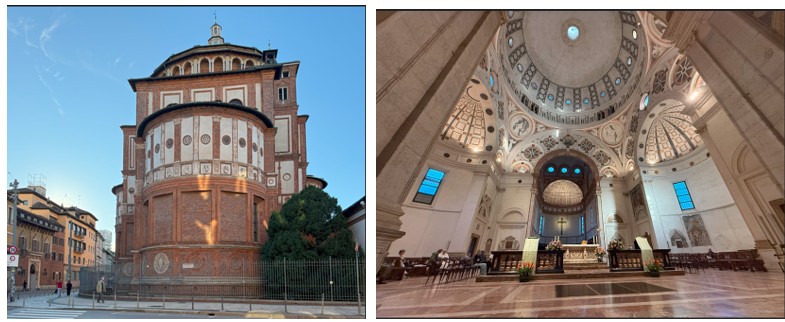
- Santa Maria delle Grazie: Home to Leonardo da Vinci’s The Last Supper.
- Porta Ticinese (Gateway built 1171) and the 16 towering Corinthian columns (dating to the 2nd or 3rd century AD) offered glimpses of Milan’s rich history.


Walls and ceilings are covered with frescoes by Bernardino Luini (a pupil of Leonardo da Vinci) and other Renaissance artists.


The Dreaded Unthinkable
On my fifth day in Italy, disaster struck — I lost my wallet. It was pickpocketed while I was on a bus. Money, cards — gone! It was a sickening feeling. I had watched countless videos on how pickpockets operate — yet I still became a victim. A lady on the bus pointed to a dog’s snout; I nudged its owner to look. In that tiny moment, the thief struck.
I visited the nearby police station and filed a complaint after waiting for an hour. While there, I shared the waiting room with a distraught man who’d lost his wallet and two other women. After filling out the form, I waited another hour for the officer’s interview. Finally, I walked away with a copy of the complaint..
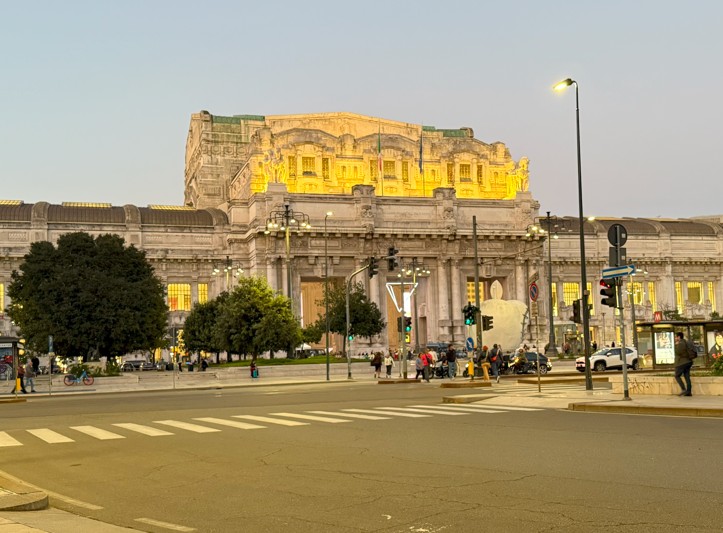
My son’s friend in Spain, Taushik, sent euros via Western Union. To collect them, I walked through a beautiful park and past Milan’s illuminated Centrale station. After picking up the money, I paused for coffee nearby, then caught a bus back to my hotel
I was back on track, ready for Florence. The next morning, Sept 30th, I was on a train to Florence.
Florence Sept 30 to Oct 2: Art & Music in Every Corner
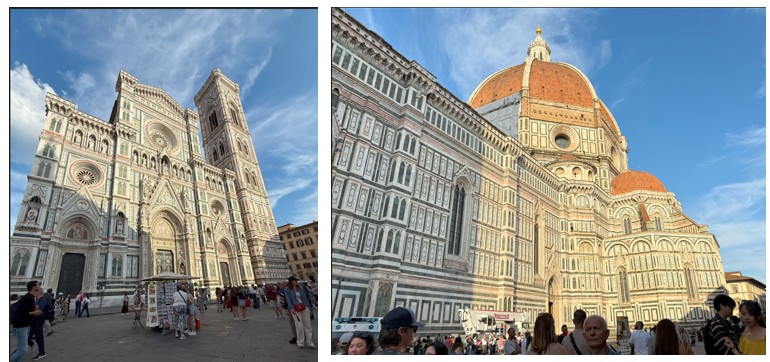
I stayed in a 400-year-old renovated house in the old town. Florence captivated me with its architecture, art, and charm. Narrow cobblestone lanes lined with cafés and shops revealed ancient monuments at every turn.
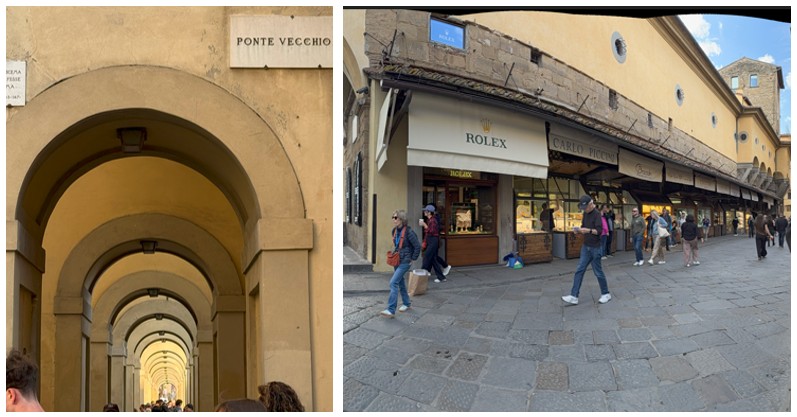
In the evening, I walked to Santa Maria Novella and across the Ponte Vecchio, enjoying the open-air opera and organ music.

October 1, I visited the Palazzo Vecchio—a palace transformed into a vast museum—and the Boboli Gardens behind it

I enjoyed a partly uphill walk to the Piazzale Michelangelo, where I was greeted by the striking replica of Michelangelo’s David.

Mercato Centrale is a vibrant multi-level market and a haven for food lovers eager to taste the region’s best.

The next day, I managed a quick trip to Pisa to see the iconic Leaning Tower.


From Florence, my route was supposed to continue easily — until the train strike intervened.
Missing My Long-Distance Bus!

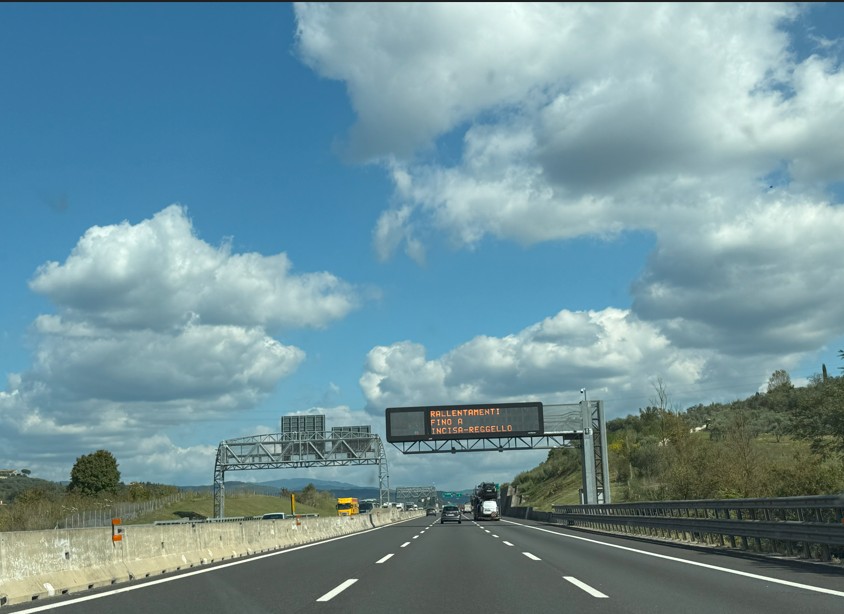
On October 3, a nationwide train strike cancelled my Florence–Orvieto train. My daughter booked me a FlixBus ticket. The boarding point, Villa Costanza, was 9 km away, with a 7:15 A.M. departure. It was a 30-minute ride, but that morning, I couldn’t find a taxi.
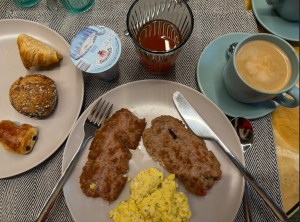
At 6:30 a.m., in the cold and dark, I stepped out and ran with my small suitcase to another bus station, Piazzale Montelungo, hoping my bus might pass there. It didn’t. Defeated, I returned to the hotel, where Francesco’s hot breakfast revived me. Later, Taushik booked me a BlaBlaCar ride with IIaria. Ironically, her pickup point was the same Villa Costanza stop I had missed earlier! With no taxis available again, Francesco suggested taking the tram. IIaria picked me up from there, and I enjoyed the car ride.
Orvieto October 3 – 4: Hilltop Beauty
What an amazing old hill town!

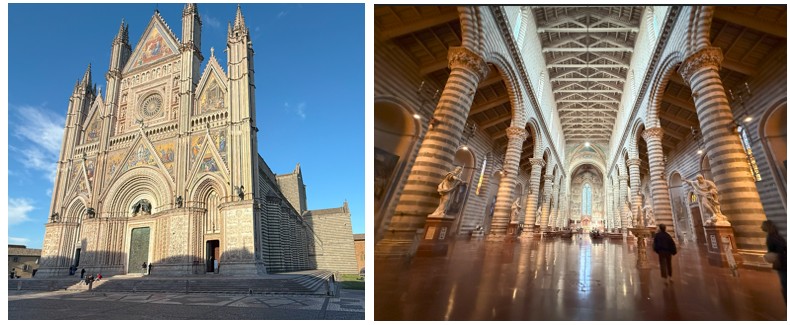
Duomo di Orvieto is one of Italy’s most magnificent Gothic cathedrals, begun in 1290. Its façade is a breathtaking masterpiece — richly decorated with gold mosaics, marble columns, and sculpted saints. The striped black-and-white stonework gives it a distinctive rhythm.

St. Patrick’s Well (Pozzo di San Patrizio), built in 1527. It’s an engineering marvel with two spirals to the well, one to go down and the other to come up. I was thrilled to receive a senior citizen discount, but what an experience it was!
As I descended, I didn’t see anyone coming up and assumed there was a lift — so I happily continued down. Only later did I realize I had to climb all 248 steps back up! Clear water below.

Underground Orvieto
This hill- town sits atop a vast network of tunnels carved into volcanic rock. Among those tunnels are columbaria — cubby-like niches once used by households to house pigeons for food.
The cathedral above still stands firm!


Rome October 5-7: where history came alive
My final stop
On the evening I landed in Rome, I visited the Santa Maria Maggiore near my hotel, and then had a long walk to the Trevi Fountain.


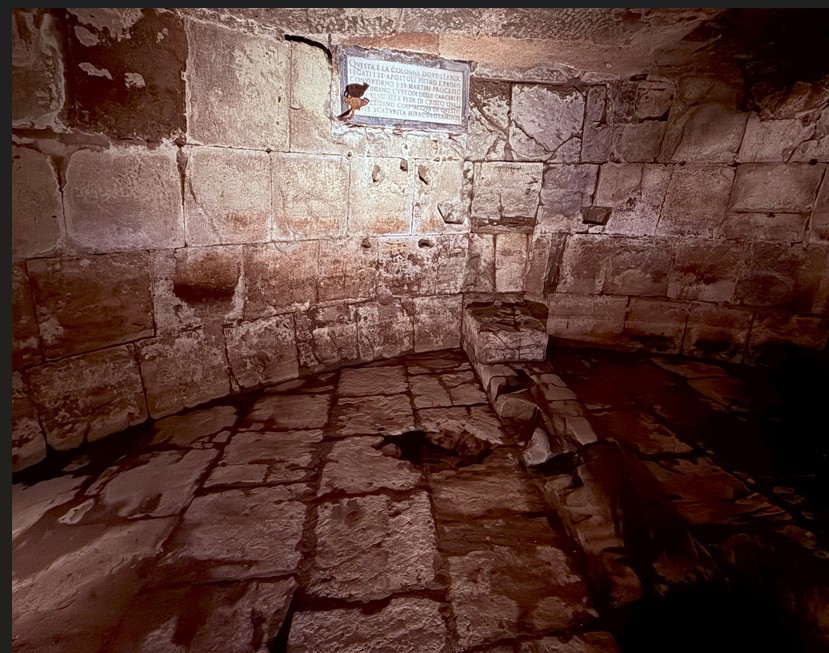
The next day, October 6, I visited the Mamertine Prison, Basilica of San Giovanni in Laterano, the Colosseum and the Roman Forum.
Visiting the cell where the Apostles Peter and Paul were imprisoned before their martyrdom was deeply moving.
Standing in that cold stone chamber, time seemed to stand still.
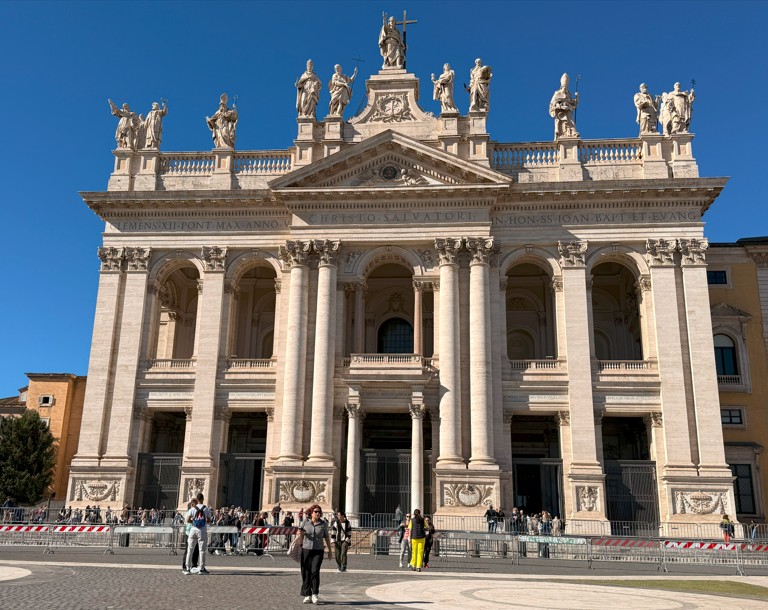
I took a short bus ride to St. John’s Lateran, the mother church of all Catholic churches, built in 324 AD by Emperor Constantine — a truly awe-inspiring sight, especially inside the Church.

A quick bite before I explored the Colosseum and the Roman Forum
Stepping into the Colosseum is like walking into history itself — built nearly 2,000 years ago, this colossal amphitheater once held up to 50,000 spectators who came to watch gladiators, wild animal hunts, and public spectacles. Despite centuries of earthquakes and stone robbing, the Colosseum still stands as a testament to Roman engineering genius and the grandeur of the empire’s public entertainment.


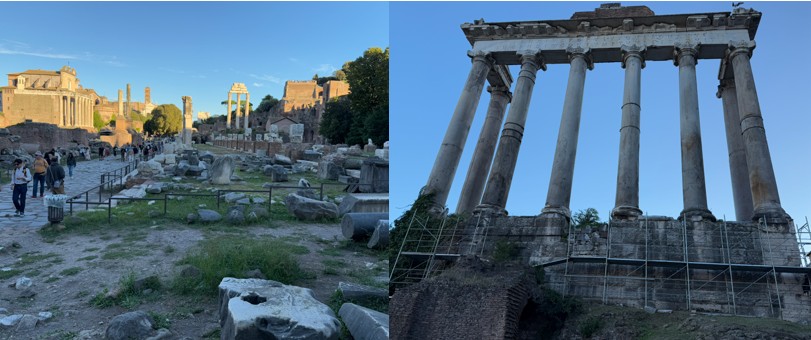
Roman Forum: I explored the ruins of the Roman Forum — once the center of daily life in ancient Rome.

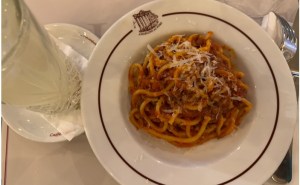
On my last day in Rome, October 7, my plan was ambitious — visit St. Sebastian’s Catacombs, St. Paul’s Cathedral, the Vatican Museums, the Sistine Chapel, and St. Peter’s Basilica. It was going to be a full day of faith, history, and art.
The Catacombs Adventure
On my last day in Rome, I took a bus to St. Sebastian’s Catacombs. When I spotted a “Catacombs” sign near an old stone arch, I jumped off — I was still five stops away!
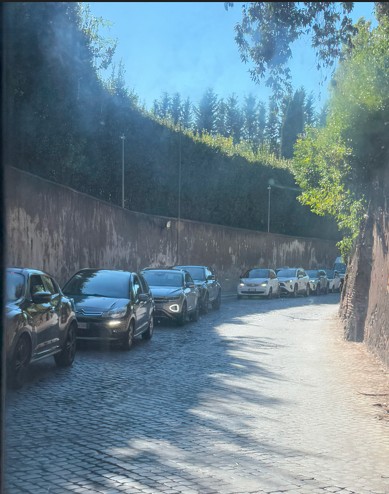
Apparently, Rome’s underground labyrinth stretches nearly 600 kilometers. The sign was indeed for catacombs — just not the one I had a ticket for! I boarded another bus, but it went in the opposite direction. A commuter explained it was a circular route and assured me I’d get there eventually. She was right.
When I finally reached, my timed entry had long passed, and I had a 15-minute walk to the chapel. A nearby guide offered me a lift in his cart. I hesitated, then accepted — and arrived just as the English tour began. I’d have missed it completely. He refused any payment, and I thanked him warmly.
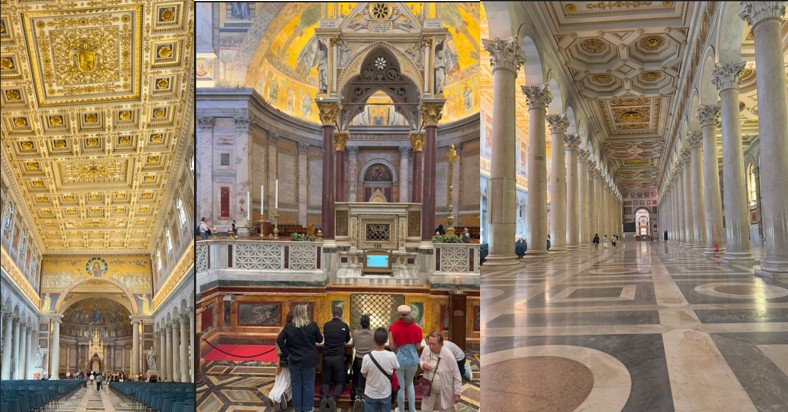
After the catacomb tour, I caught a bus and a metro connection to my next stop — the Basilica of Saint Paul Outside the Walls, the burial place of the Apostle Paul.
I had a quick bite and headed to my final stop, the Vatican City. It was an hour long ride on a bus.
Can You Trust ChatGPT for Your Travels?
Not entirely. While it’s brilliant at listing heritage sites, sharing details and directions you still need to cross-check before following suggestions.
On my last day in Rome, for instance, the plan was to visit the Vatican Museums and the Sistine Chapel until 6:30 p.m., and then head to St. Peter’s Basilica. ChatGPT had even calculated the walking time between them. But when I reached St. Peter’s, the gates were already closed — apparently, in October, it shuts at 6 p.m. I should have checked!
For my departure to the airport, the plan showed a train — which turned out to be a regional service. There’s no metro line to the airport, so rather than risk it, I took a cab to FCO instead.
All said and done, ChatGPT is a wonderful travel companion — it helps you dream, plan, and refine endlessly. Just remember: even the smartest AI can’t replace a little human judgment.
Reflections & Little Discoveries
Museums
The best time to visit is right when they open. You can wander at your own pace. Many museums have senior citizen discounts except the Vatican one.
The Proust Armchair
At one museum, I was drawn to Alessandro Mendini’s Proust Armchair. Mendini, a visionary Italian designer, imagined what kind of armchair the writer Marcel Proust might have owned — and brought it to life in vivid color and form. It’s an icon of postmodern design, blurring the line between furniture and art.

Colorful Frescoes on the Ceiling
Many palaces and cathedrals feature stunning ceiling frescoes. I wondered how artists managed to paint them.
At Palazzo Pitti in Florence, I learned that scaffolds were once suspended by ropes through ceiling holes, allowing artists to paint on wet plaster before it dried.


In St. Sebastian’s Chapel, I saw a fresco of the saint pierced by arrows on the ceiling of the chapel. Sebastian lived for 33 years (AD 255–288), surviving one execution attempt before being martyred later.
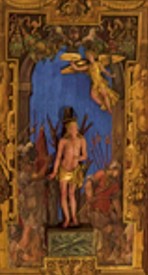
Italy, with its legacy of painters, musicians, architects, and sculptors, feels like a living museum. Around every corner stands another church or palace — a silent witness to centuries of art and faith.
Looking Back
My holiday reminded me that every missed bus, wrong turn, or lost wallet becomes a story — one etched forever in memory. Traveling solo in a foreign country isn’t always easy — but it’s deeply rewarding. You learn to trust yourself, find beauty in detours, and grow in confidence with every challenge.
Using public transportation in Italy took some figuring out. I found myself missing Switzerland’s SBB Pass, which for 14 days had allowed unlimited travel across their entire public transport network. In Italy, what worked for me was purchasing long-distance tickets online and using the 24-hour local pass. Once stamped, the 24-hour pass lets you hop on any bus, tram, or metro and made getting around the cities convenient.
Yet, even with planning, real travel demands flexibility and proved that detours often make the best stories.
Travel Tip: Ensure you have valid travel insurance before you start your trip. In case of any loss, file a report — even if it feels intimidating. It’s essential for claiming reimbursement later.

 A Hundred Contemplations
3 responses to “My Italian Holiday”
Wow Jean, thats one adventurous trip!
The beautiful pictures and the anecdotes make for a very interesting read.
So sad to hear about your loss to the terrible pick-pockets that plague Italy. Dont know why the govt does not do anything to curb this menace.
Thank God you had Kenny’s friend to help out! The way you handled this incident and remained positive enough to enjoy the rest of your travels is really inspiring.
Your article gives some very useful tips on using AI to plan ones travel.
It takes a lot of mental strength and confidence to travel alone in foreign lands – something that you have in abundance!
Thanks, Philip! I received the reimbursement from the insurance company today — exactly the amount I lost. 🙂
You experienced the gamut of Italian artistry — from the Great Masters to a masterful pickpocket!