
A voice told me, “Jump now,” but I stood transfixed watching the ferry move away ever so slowly from the dock. “I can still make it,” I thought, “it’s just a long jump,” but I was mesmerized by the growing gap between the ferry and the dock and the flowing Brahmaputra River, and stood rooted! I watched the ferry till it was quite some distance away and headed back to the tea estate where I was lodged. It was a hundred km away. At that moment, I didn’t realize, but the boat I missed was the last one for the next couple of days from the “ferry ghat”.
My return flight to Bangalore that day was from Dibrugarh Airport in Assam. I cancelled my flight.
When the ferry services didn’t resume even after three days, I took a 540 Km drive along the Brahmaputra River to reach the airport in Guwahati with a night’s stay at Air Force Station Tezpur!

But reaching the Donyi Polo tea estate itself was a unique experience! I’m so glad of the opportunity that came my way to take part in a wonderful project.
On August 19, 2014, I reached Bogibeel ghat by taxi from the Dibrugarh airport. There was this smart lady with me, (a stranger) who hitched a ferry ride for both of us with a local MLA. So, I ended up traveling with a minister and his gun-toting security guards. The ferry was also carrying the minister’s huge car!

A few weeks earlier I had received an invite from Feli Visco to see her project in action and I didn’t hesitate one bit and accepted the invite!
And what an adventure it was!
Feli Visco a young Engineering graduate, in collaboration with Lwama and Visco planned to provide electricity to fifty homes in a remote village in North East India! The project was titled “Lights on in Pongging“.
Pongging is a tiny hamlet on the banks of the Siang River in the state of Arunachal Pradesh in India. Two years earlier the electricity line was destroyed in a storm and attempts to restore the line failed. Some villagers purchased solar lamps at exorbitant prices while some used kerosene lamps. There were school children in this village and everyone deeply suffered the absence of electricity.
Feli and her colleagues surveyed the land and decided a 3 Kilowatt hydro turbine installation could supply power to the village. The cost of the project was crowdsourced and soon all the inhabitants were delighted when their lights turned on at night!
The trek to Pongging took 2 hours through densely wooded hills and a walk over a hanging bridge that is the lifeline for the people living at Pongging.


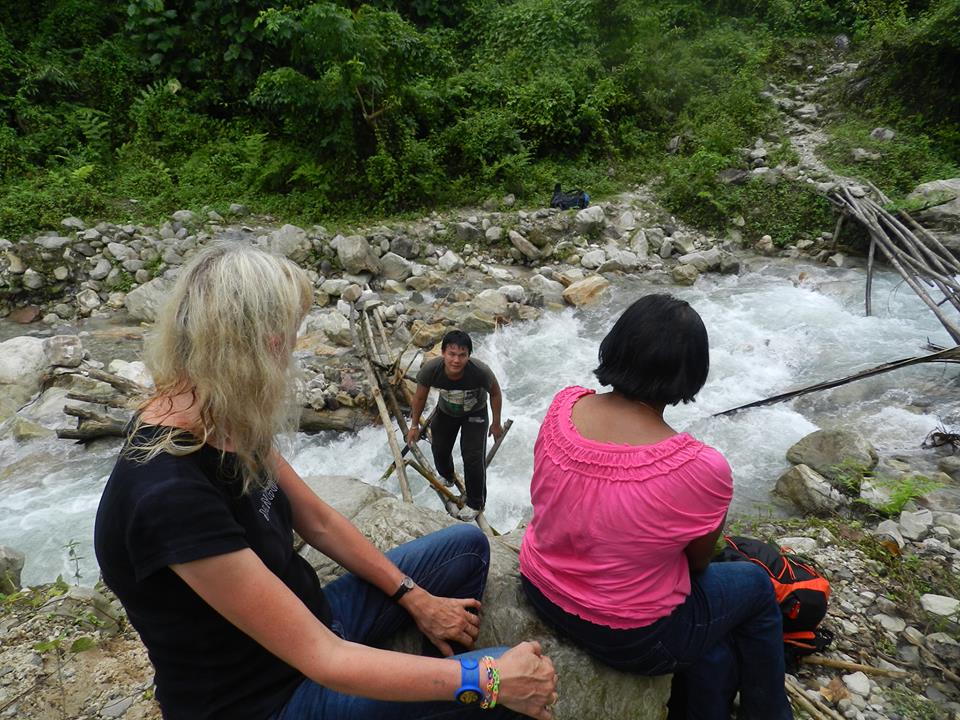
Al last, we reached Pongging. The kids were happy to get visitors!

We walked down to the river bank that had the turbine and appreciated the lighted huts at night.
Durga Pannying hosted our stay in his house in the village. We ate their local food and had a comfortable night sleeping on the wooden floor.

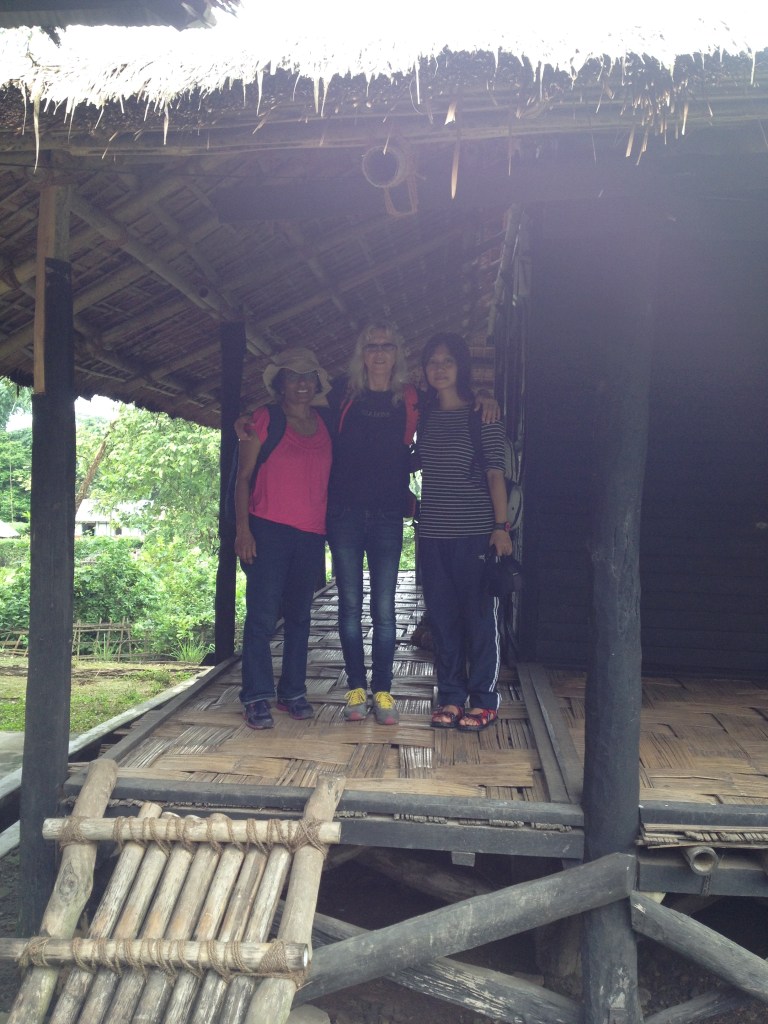

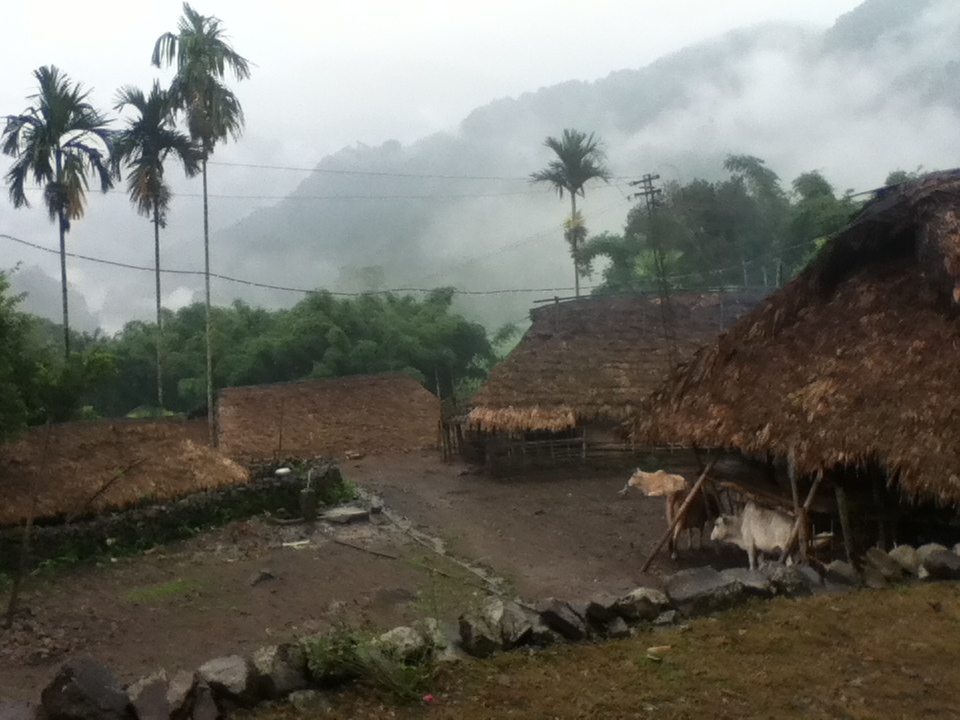


From start to finish, it was an amazing experience with wonderful people not to forget the very hospitable host at the tea estate!
The latest news on Pongging is that a Hydro Electric Project is planned on Lower Siang River and if that happens Pongging will be one of the villages to be submerged!
Looking back, I’m so glad I accepted the invite to see Pongging for who knows how long this little village will hold on, and happy that I missed the return boat! For I got to stay a few more days on this magnificent tea estate, and see bits of their rural life, how they catch fish from the stream, rearing silk worms, and the weaving of silk stoles. Even the drive to Guwahati was fascinating. It was intriguing to see how life continued along the overflowing banks of the Brahmaputra River!
Jean Rao
 A Hundred Contemplations
One response to “Lights on in Pongging!”
A lovely experience, getting to visit these awesome locations! But submerging the village permanently is a bit tragic!
LikeLiked by 1 person